
Category: Treatment

Two people sit at a wooden table outdoors, passing a rolled cigarette or joint between them. An ashtray is on the table, and colorful buildings are blurred in the background.

Is Quitting THC Cold Turkey a Good Idea?

Unfortunately, marijuana withdrawal symptoms affect many people with cannabis use disorder (CUD). CUD, also referred to as marijuana use disorder, means that using weed has come to complicate and negatively impact your physical, emotional, or social life. These complications can range from mild to severe. It’s common for people who begin smoking weed early in life and continuously consume it to develop marijuana use disorder.   Often, if people with CUD—or even those who don’t feel

Read More »
Two women sit outdoors; one appears sad with her hand on her face, while the other gently touches her shoulder, offering comfort. Both wear denim jackets and have curly hair, with blurred buildings in the background.

How to Talk to Your Family About Going to Treatment

Addiction is everywhere, and it can be incredibly challenging to treat it and convince others to get help for it. While it might seem like having a substance use disorder (SUD) and entering an addiction treatment program has become fairly normalized, addiction stigma can still be a huge roadblock to sobriety.  The best way to overcome stigma is through education. Exposure to recovery narratives or stories may have the potential to break down addiction stigma,

Read More »
A person in a dark green shirt uses a smartphone, tapping the screen with one hand and holding the device with the other, against a neutral background.

What Is a Blackout Period in Recovery?

If someone you care about has recently decided to seek addiction treatment, you may find yourself wondering what a blackout period means. Not to be confused with the memory loss that can accompany heavy drinking or drug use, a blackout period is simply a temporary break from communicating with the outside world.   About the Blackout Period The term blackout period is used to refer to an introductory period when a client first arrives at

Read More »
A woman with long brown hair looks out a window on a rainy day, resting her head on her hand, appearing thoughtful or sad. City buildings are blurred in the background.

Managing Benzo Withdrawal Symptoms: A Comprehensive Guide

It’s estimated that over 30 million adults in the United States have used benzodiazepines such as Ativan, Xanax, Klonopin, and Valium in the past year. Misuse of these powerful medications accounts for approximately 20% of overall benzos use, even though most of the individuals misusing benzodiazepines initially took the drugs under a doctor’s supervision.  While benzos can be very effective in treating anxiety, it’s important to keep in mind that they are not intended to

Read More »
A teenage boy sits on the floor, looking thoughtfully at an adult man sitting nearby in a living room with a sofa and plants in the background.

How To Talk To Your Teen About Your Addiction

When adults come to our North Charleston and Cameron residential treatment programs for their substance use disorder (SUD), they often leave children at home, under the care of family members or friends.   The strain that a caretaker’s absence may create for families can be overwhelming, especially for teenage children. At a tender time in their development, teens who see a mother, father, or parental figure go to rehab can experience a high level of stress—but

Read More »
A healthcare professional in green scrubs writes on a clipboard while sitting beside a patient with a blood pressure cuff on their arm. Another person is seated in the background. The setting appears to be a clinic or hospital.

Why Detox Alone Usually Doesn’t Work

While detox is an essential component of the recovery process, it’s not a substitute for comprehensive residential addiction treatment. Let’s take a look at why detox alone falls short of providing the necessary support for long-term sobriety and how residential addiction treatment at Waypoint Recovery Center can help you build the foundation for a sustainable recovery.   What Happens During Detox? Drug and alcohol detoxification, often referred to as substance abuse detox, is a specialized

Read More »
A person sits alone on a dimly lit staircase, knees up and head resting on their arms, silhouetted against a window with soft light coming through.

6 Reasons Why You Shouldn’t Wait For Rock Bottom

One of the biggest misconceptions about seeking addiction treatment is that you need to wait for a rock bottom moment to decide to get help. Although it’s true that dramatic turning points like a near-fatal overdose, job loss, or an addiction-related arrest can inspire people to seek treatment for their substance use disorder, waiting for rock bottom is an unnecessary risk.  Let’s look at the reasons why embracing treatment now can lead you to a

Read More »
Two hikers on a rocky slope, one reaching down to help the other up. The sun shines brightly behind them, creating a silhouette effect. Both wear backpacks and are climbing outdoors.

From Shame to Strength: Overcoming Barriers to Seeking Addiction Treatment

When you’re struggling with a drug or alcohol addiction, shame can make it feel as if an invisible weight is pressing against your entire body. Deep down, you know you need help. It’s just that you can’t see how to ask for it. It might surprise you to learn that many of the classic signs of addiction are linked to deep-seated feelings of shame. For example:  Causes of Shame Some of the underlying causes of

Read More »
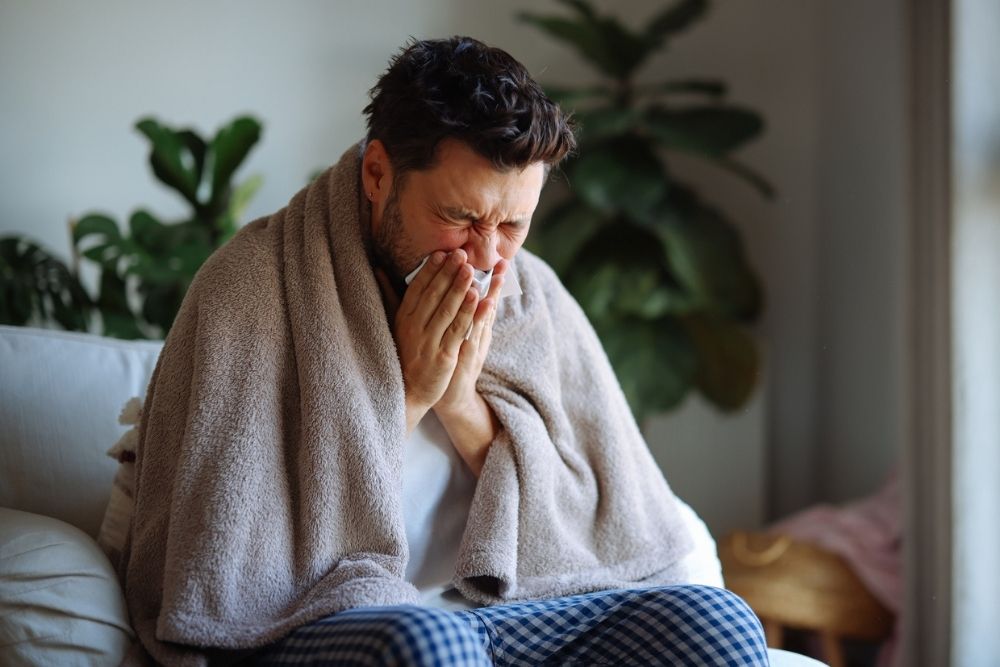
A man sits on a couch wrapped in a blanket, sneezing into a tissue. He appears unwell or sick, with indoor plants visible in the background.

Overcoming the Fear of Withdrawal

Withdrawal is the first step in the recovery process for people who are struggling with drug or alcohol addiction. This term refers to the physical and psychological symptoms that arise when a person goes through detox to stop using a substance they have become dependent on.  It’s true that withdrawal can be challenging. However, you don’t need to let fear of withdrawal keep you from taking steps to build a brighter future for yourself. Understanding

Read More »
Two people sit indoors, holding mugs and having a serious conversation. One person with curly hair and a green sweater gestures while speaking, while the other listens. Shelves and a sofa are visible in the background.

Easing the Transition Back to Independent Living After Residential Addiction Treatment

Congratulations on completing your residential drug and alcohol addiction treatment program! You’ve worked hard and achieved an important milestone in your life. You’re ready to start living independently and free of addiction, but how can you do this safely?  Here, we share some tips to help you transition back into independent living without jeopardizing your recovery efforts. If you have any additional questions or concerns, we encourage you to contact our experienced addiction treatment professionals

Read More »